
Pennsylvania is Where Horse Country is Vast and Layered
This is Horse Country
How Devon, Harrisburg, hunt country, Standardbreds, Amish craftsmanship and Olympic-level sport horse culture make Pennsylvania one of America’s most layered equestrian states.
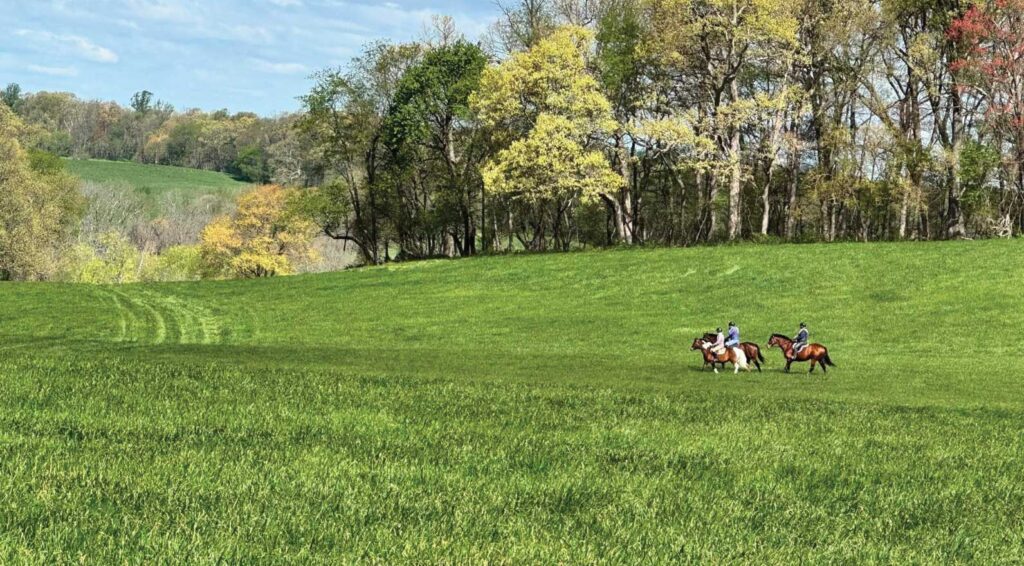
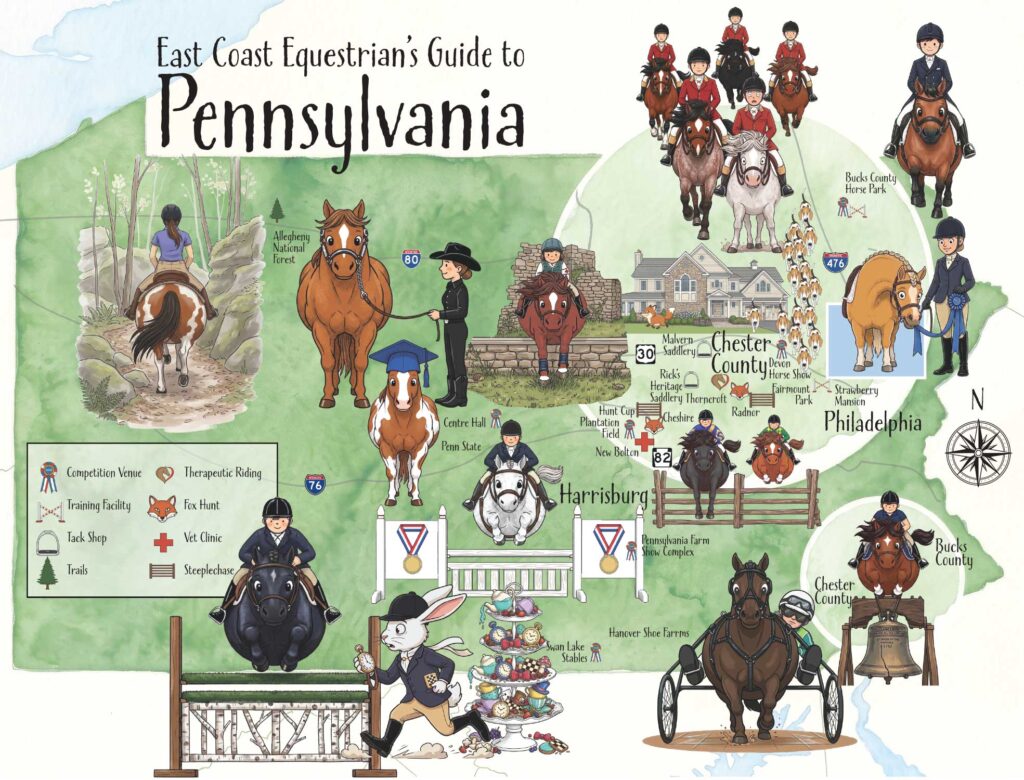
What makes Pennsylvania different from many other East Coast horse states is the layering. In one state, there is old hunt country, Olympic eventing barns, Amish working horses, Standardbred breeding farms, polo fields, county fairs, indoor championships, trail riders (Allegheny National Forest alone maintains over 100 miles of dedicated horse trail and its own equestrian campgrounds, and backyard horse owners existing within the same living horse economy. It even includes horses that never leave the city — Philadelphia has its own century-old tradition of urban Black horsemanship, still active today through community riding clubs and youth programs in Fairmount Park and Strawberry Mansion.
The numbers explain part of the story. Pennsylvania is estimated to have more than 223,000 horses, ranking it among the top ten horse states in the country. The industry contributes roughly $3.3 billion in total economic impact, supports more than 60,000 jobs and uses nearly 793,000 acres for horse-related purposes. About 1.6 million Pennsylvanians identify as horse people.
The most famous face of Pennsylvania horse country is southeastern Pennsylvania, especially Chester County, the Main Line and the Brandywine Valley. This is the Pennsylvania of stone barns, preserved farms, rolling hills, split-rail fences, old estates and shaded lanes. Unionville, Devon, Malvern, Kennett Square and Coatesville have the density that makes a place feel unmistakably equestrian. A show barn, hunt fixture, polo field, breeding farm, Thorncroft — the oldest and largest therapeutic riding program in the state — and an Olympic rider’s training operation can all sit within a short drive of each other.
Devon is the state’s great public ritual. Founded in 1896, the Devon Horse Show and Country Fair is the oldest and largest outdoor multi-breed horse show in the United States. It is serious sport, but it is also community theater: hunters in the Dixon Oval, Saddlebreds and Hackneys under the lights, coaching, Ladies Day, lemon sticks, family traditions and generations of spectators who may not ride but still know Devon as part of the Main Line calendar.
Few events make elite horse sport feel so civic.
Chester County is also one of the country’s most important eventing centers. Phillip Dutton, based in West Grove, is a seven-time Olympian and three-time Olympic medalist. Boyd and Silva Martin operate Windurra USA in Cochranville, a sport-horse training base with national visibility. Bruce Davidson, an Olympic medalist and former world champion, has long been associated with Unionville, and Buck Davidson continues the family’s high-performance eventing presence. This is one of the reasons Pennsylvania feels different: it is not only historic horse country. It is still shaping the sport now.
Foxhunting gives the region its older sporting backbone. The Masters of Foxhounds Association lists seven hunts in its Pennsylvania district: Andrews Bridge, Huntingdon Valley, Kimberton, Mr. Stewart’s Cheshire, Radnor, River Hills and Rose Tree-Beaufort. Add Pennsylvania-linked western hunts such as Rolling Rock and Sewickley, and the state’s foxhunting identity stretches well beyond Chester County. Alexander Cassatt, a founding member of Radnor Hunt (1883), was also president of the Pennsylvania Railroad — the rail lines out to the Main Line were built and scheduled with hunt-country access in mind. That’s not incidental; it means this “old money horse country” wasn’t inherited terrain colonized by riders, it was infrastructure deliberately planted by the man laying the infrastructure.
These hunts are not just social clubs. They are tied to land preservation, access agreements, hound breeding, conservation and the long relationship between horse people and countryside. This stewardship has long-tail influence. Earlier this year, when the Brandywine Conservancy stepped back from operating the Radnor Hunt Races after 45 years, Radnor Hunt brought the race in-house under its own foundation, with Willistown Conservation Trust taking over as the conservation beneficiary. The infrastructure gets renewed as much as it gets handed down.
Central Pennsylvania has a different kind of horse power. Harrisburg is where the state’s equine world meets its agricultural identity. The Pennsylvania Farm Show Complex has more than one million square feet under one roof and hosts more than 250 events a year. The Pennsylvania National Horse Show, held there since 1946, gives the state a major indoor-season anchor, while Horse World Expo and the Pennsylvania Farm Show connect horses to education, agriculture, commerce and the broader public.
Penn State adds another layer through equine science, its student-run Quarter Horse program and the Equine Science Showcase and Quarter Horse Sale. Central Pennsylvania is where horse sport meets workforce development. Centre Hall’s Grange Fairgrounds hosts a recurring AQHA/Pennsylvania Quarter Horse Association show circuit throughout the year: halter, showmanship, western pleasure, ranch classes.
Pennsylvania is also a Standardbred powerhouse. Hanover Shoe Farms, based in Hanover, is one of the most important names in harness racing and Standardbred breeding. Along with the state’s racetracks, breeders, trainers, yearling sales, feed suppliers, veterinarians and farriers, it gives Pennsylvania a depth that show-heavy regions do not always have. The horse economy here is not only riders and ribbons. It is foals, mares, stallions, pedigrees, sales catalogs and farm jobs.
Lancaster County and Pennsylvania Dutch country make the state even more distinctive. Amish and Plain communities keep working-horse culture visible in daily life, while also supporting a large trades economy of barn builders, harness makers, fence installers, farriers, carriage shops and craftsmen. Pennsylvania can produce a hand-built bank barn, a driving horse, a custom stall door and a world-class show hunter within the same regional ecosystem.
Western Pennsylvania adds a quieter, hillier flavor. Around Sewickley Heights, Ligonier and the Laurel Highlands, horse culture is shaped by hunt country, polo, private farms, trails and old rural society. It is less public-facing than Devon and less centralized than Harrisburg, but it gives the state another equestrian register: elegant, local, outdoorsy and deeply rooted.