
New York & Connecticut: A Geography of the Equestrian Life
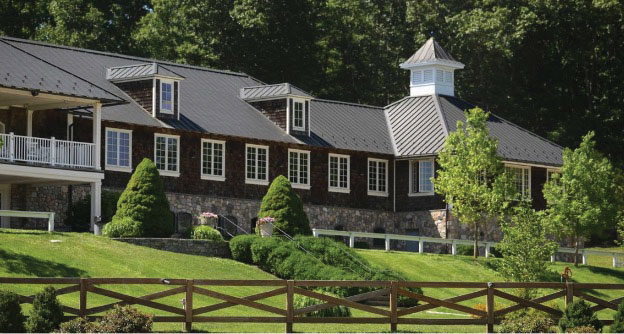 Old Salem Farm, North Salem, NY 10560
From Saratoga’s racing economy to Fairfield County’s hunter rings, New York and Connecticut’s horse country is built on old land, high standards, working farms and a deeply practical devotion to horses.
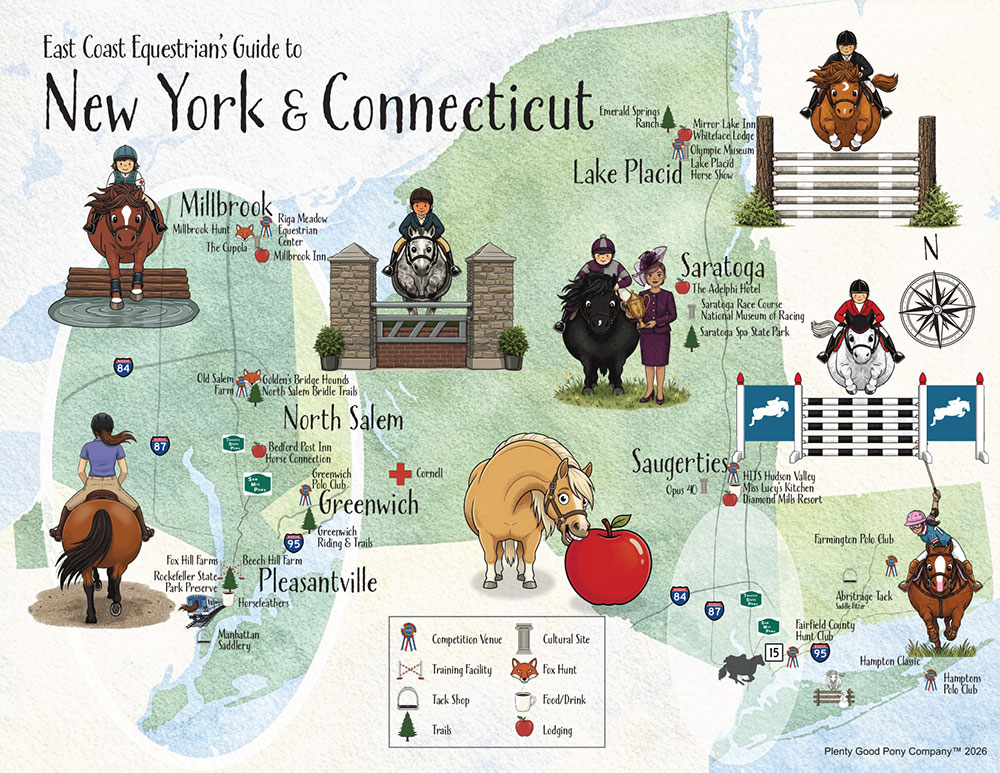
In 2007, Claremont Riding Academy on West 89th Street closed its doors. It was the last stable in Manhattan — a century-old institution where generations of New Yorkers learned to post trot on horses that somehow lived on the Upper West Side. When it went, horse culture did not disappear. It moved outward. The barns left first. The riders followed — to Westchester, Fairfield County, Dutchess County, the Hudson Valley, Saratoga, Lake Placid and the Hamptons — creating a legible geography around New York City. Each zone represents a different answer to the same question: how far will you go to keep horses in a life built around Manhattan?
New York and Connecticut share a Northeast horse culture: old land, high standards, serious sport, working farms, hunt clubs, preserved open space and practical devotion to horses. New York is broad and muscular, with racing, Saratoga, Belmont, HITS, Old Salem, Lake Placid, the Hamptons, eventing and foxhunting. Connecticut is smaller, denser and more exacting: Fairfield County hunter rings, polished junior programs, old clubs, backcountry polo and a barn culture shaped by wealth, limited land and proximity to the city.
Greenwich · Westport · Pleasantville
The close-in tier is for the rider who wants horses in the life without reorganizing the whole life around horses. These places can be reached by Metro-North, making the trip part of the decompression. Greenwich sits slightly apart, less a place one drifts into than a threshold one crosses. The polo, trails and backcountry roads feel maintained rather than discovered. Greenwich Polo Club gives the town an international sporting polish, while its bridle trails preserve a quieter version of horse life. Westport brings the map firmly into Fairfield County’s hunter-ring culture. Fairfield County Hunt Club carries the old language of hunt country, but its modern identity is rooted in hunters, jumpers, equitation, junior riders and professionalized show programs. In Fairfield County, proximity does not mean casual. It means precise. The barns are close together, the standards are high, and the old club structure still gives the sport ceremony. Pleasantville opens onto Rockefeller State Park Preserve, whose bridle paths feel much farther from the city than they are. Nearby Kykuit and Blue Hill at Stone Barns add the old-estate flavor: Rockefeller land, working-farm memory and the sense that parts of Westchester stayed rural because people with horses wanted them to.
North Salem · Bedford · Millbrook
This is where the equestrian culture of the New York metro is densest. The Weekend tier is not about mileage. It is about relationship. Riders come regularly because the barn has become a second home. North Salem is the hub of hubs. Old Salem Farm is one of the East Coast’s defining hunter/jumper venues. But North Salem is not only a show-ring town. Its horse culture sits on hunt country, private trails, old roads, preserved land and the infrastructure that makes a weekend horse life possible. Bedford overlaps culturally and geographically. The Bedford Riding Lanes Association maintains hundreds of miles of private trails through land that has remained open because the horse community made preservation a civic priority. Horses do not simply use the land here; they help justify saving it. Millbrook is quieter and more agricultural, with the Millbrook Hunt, horse trials at Riga Meadow and the broader feel of old hunt country: fixtures, fields, farms, landowners, conservation and manners. If Bedford feels like inherited country life carefully preserved, Millbrook feels more private and less interested in being seen.
Saugerties · Saratoga Springs · Lake Placid
The Event tier requires intention. You go because a show, a race meet or a summer circuit gives you a reason to build a trip around horses. Saugerties is the working show-circuit version. HITS-on-the-Hudson brings national-level competition into a Hudson Valley town with its own identity beyond the rings. Its appeal is practical and familiar: rings, trucks, braiders, hotels, dinners and long show days.
Saratoga belongs in a different register. It is not merely a place where horses happen; it is a city whose economy, calendar and social identity have been organized around racing for generations. The summer meet brings elite stables, national media, sales, visitors, restaurants, hotels and spectators into one seasonal engine. The National Museum of Racing makes clear that this is history, not decoration. Saratoga’s flavor is Gilded Age spectacle that never really dimmed. Other towns preserve horse culture. Saratoga performs it. Lake Placid is the outlier: remote, seasonal and unmistakably itself. Its summer horse shows are both competition and destination, with Olympic memory and Adirondack remoteness giving the place a sporting seriousness and a preserved, almost suspended quality.
The Hamptons · Manhattan
Bridgehampton belongs here because the Hampton Classic belongs here: one of the country’s most visible horse shows, held at the end of August and attended by plenty of people who would not otherwise call themselves horse people. But Bridgehampton is not deep horse country in the same way North Salem, Bedford, Millbrook or Saratoga are. Its power is ritual — late summer, seasonal pedigree, white tents, serious sport and social theater in the same ring.
The closing of Claremont did not end New York horse culture. It clarified it. The horses were pushed into the rings, trails, hunt fields, preserved lanes, racing towns and summer showgrounds that now define the region’s equestrian life. What remains is not one horse country, but several: Fairfield County’s hunter rings and old clubs; Greenwich’s polo-and-trail culture; Rockefeller Westchester’s estate memory; North Salem and Bedford’s weekend barn life; Millbrook’s hunt-country seriousness; Saugerties’ working circuit; Saratoga’s racing economy and spectacle; Lake Placid’s Olympic remoteness; and the Hamptons’ August ritual. Together, they form a geography of effort and return. Horses here are work, business, sport, history, community, identity and obligation. They preserve land, support jobs, teach children, gather families and draw crowds. And in a region known for speed and pressure, they still ask people to slow down and learn the rhythm of another living being.