

What Became of The Great American Tack Shop
After decades of corporate takeovers, consolidation, changing economies, and online disruption, equestrian retail is rediscovering its heartbeat. For State Line Tack, more than 45 years of reinvention have brought it full circle—back to the horses, riders and community that started it all.
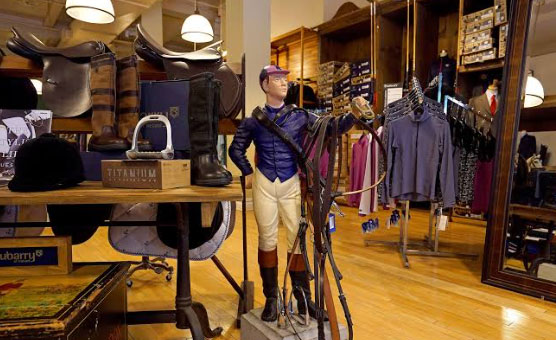
There was a time when buying a new bridle meant a trip to the tack shop. You could smell the leather, compare workmanship and ask the person behind the counter which brand might survive another season of hard use. The mail-order catalog changed that experience, bringing an extraordinary selection of equipment to riders miles from the nearest saddlery. The internet changed it again.
Today, equestrian retail is experiencing another period of upheaval. Investment firms have moved into the industry, major retailers have changed hands, online shopping has become second nature, and boutique brands have built international followings through social media. Yet amid the consolidation and technological change, something familiar is reemerging: an appreciation for businesses that understand horses, know their customers and remain connected to the communities they serve.
Few retailers have experienced as much of that evolution as State Line Tack.
From a New Hampshire Barn to a National Brand
State Line Tack began in 1980 in a converted barn in Plaistow, New Hampshire, near the Massachusetts border that gave the company its name. Its enormous selection and competitive prices attracted riders from throughout New England, while its growing catalog business eventually extended its reach nationwide. For horse owners accustomed to limited local inventories, State Line Tack represented something extraordinary: access to equipment, clothing and supplies across disciplines and price points. It helped make a notoriously expensive sport more accessible.
The company’s success also attracted corporate attention. PetSmart acquired State Line Tack in 1996, eventually establishing approximately 180 equestrian departments inside its stores. But horses proved different from household pets, and the specialized market did not fit comfortably into the company’s broader retail strategy. In 2007, PetSmart announced its withdrawal from the equestrian business.
State Line Tack survived, although its next chapter looked considerably different. PetsUnited, subsequently known as TABcom, acquired the brand’s name, inventory and customer assets, shifting the business toward the growing online marketplace. Today, the family-owned operation continues to serve customers nationally, combining broad product selection and competitive pricing with customer service provided by people knowledgeable about horses.
Its journey mirrors the industry’s larger transformation, one that has accelerated dramatically in recent years.
Big Money Meets the Tack Room
Consider Dover Saddlery. Founded in 1975 by accomplished equestrians Jim and David Powers, Dover became one of the country’s most recognizable English riding retailers, building an extensive catalog business and national store network. It went public in 2005 before being acquired by private equity investors in 2015. Another investment group, Promus Equity Partners, took control in 2022.
By May 2026, Dover’s financial difficulties had become an industry-wide concern. Gordon Brothers had acquired the business, and liquidation sales threatened its remaining stores. Dover has since announced plans to return under the ownership of a multigenerational horse family, promising to restore the products, service and community relationships that established its reputation.
The disruption illustrates the sometimes uncomfortable relationship between investment capital and a highly specialized retail business. Scale, margins, and operational efficiencies matter, but equestrian customers also expect knowledgeable advice, consistent inventory and a retailer that understands their particular needs. The requirements of a hunter-jumper competitor, a backyard horse owner and a working ranch are not interchangeable, and neither are their buying habits.
Meanwhile, Chewy, the online pet retail powerhouse, completed its $175 million acquisition of SmartPak in February 2026. SmartPak had built its business around a deceptively simple innovation: prepackaged daily supplements delivered directly to horse owners. The acquisition brought its equine nutrition expertise and established customer relationships into a considerably larger digital retail organization, one with extensive experience in subscriptions, fulfillment and customer retention.
Other brands, including LeMieux and a growing number of fashion-forward equestrian labels, have demonstrated how direct-to-consumer websites, social media and international distribution can build loyal audiences without depending entirely on traditional tack shop shelves. Boutique retailers, meanwhile, have found success catering to particular disciplines and customers who value carefully selected merchandise over endless inventory.
The result is a retail landscape simultaneously becoming bigger, more fragmented and more competitive. And for all the convenience of the online marketplace, the industry’s latest upheaval has also revealed what digital shopping cannot always replace.
The Return of the Local Connection
Equestrian retail analyst Orchid Bertelsen, writing in her Back in the Saddle industry series, has examined the limitations of a market increasingly dependent on a handful of national retailers. Her research identified more than 650 independent tack shops across the United States and Canada, many offering the expertise and personal relationships that have long distinguished specialty retail. She sees an opportunity for local stores, but not simply because customers may be disappointed with the national chains. Independent tack shops must become easier to find and easier to shop, embracing modern websites, digital marketing and customer outreach while maintaining the product knowledge and personal attention that make them distinctive in the first place.
A rider may happily order supplements, fly spray or another pair of familiar breeches online, but still want knowledgeable help selecting a helmet, evaluating a saddle or finding equipment for a particularly difficult-to-fit horse. Retailers capable of combining convenience with expertise have an advantage that cannot be measured entirely in price. For State Line Tack, which pioneered national selection long before e-commerce existed, the challenge is familiar: how to make riding affordable and convenient without losing the human connection that makes equestrian retail different.
More for Riders. More for Horses. More for the Community.
That connection is central to State Line Tack’s renewed emphasis on community involvement. Through State Line Tack Gives Back, the company has brought its charitable, sponsorship and customer programs together under a common mission: More for riders. More for horses. More for the community.
“State Line Tack has been part of the horse community for more than four decades, and we believe that comes with a responsibility to give back to the people and horses who make this industry so special,” said Kim Kulers, the company’s marketing director. “State Line Tack Gives Back allows our customers, vendor partners and our company to work together to make a meaningful difference throughout the equestrian community.”
At the center of that effort is Ride It Forward, an initiative supporting equine rescues and therapeutic riding programs through financial contributions, product donations and customer participation. The approach is designed to turn everyday purchases into ongoing support. Participating organizations receive personalized shopping links that generate contributions from eligible purchases. Through Cart With Heart, customers can round up their orders at checkout, with State Line Tack matching those donations for featured organizations. The company’s Spotlight program provides selected organizations with more than $5,000 in donated products from participating vendors, along with financial contributions, while its Buy One, Give One offerings allow customers to purchase designated products that generate matching donations to participating organizations.
Together, these initiatives have helped State Line Tack support more than 150 organizations. Its broader Equine Partnership Program and sponsorship efforts have reached more than 250,000 competitors through horse shows, breed associations and equestrian organizations.
Customers benefit directly as well. State Line Tack reports returning more than $2.5 million through its loyalty rewards program, while awarding more than $1,000 in monthly prizes. Altogether, the company reports contributing more than $500,000 to the horse community, separate from customer rewards.
There is a commercial dimension to the programs, certainly. Customer loyalty, vendor partnerships and community investment are increasingly important elements of modern retail. But for equestrians, whose sport depends on volunteer organizations, grassroots competitions, therapeutic programs and rescue networks, the benefits extend beyond a single purchase. A retailer’s investment in those organizations helps sustain the very community it serves — which may be the most important distinction in a market increasingly shaped by mergers, acquisitions and digital technology.
More consolidation is possible, online businesses will continue to expand, and independent tack shops will have to work harder to distinguish themselves. Yet the industry’s experience suggests that convenience and competitive prices are only part of the equation. Knowledge, trust and a shared commitment to horses remain powerful reasons for customers to return.