
Riding the Odds
From helmet ratings and air vests to fitness and fall training, equestrian safety is a complicated—and very personal—business. What the research reveals, what remains uncertain, and how to improve your chances to stay safe.
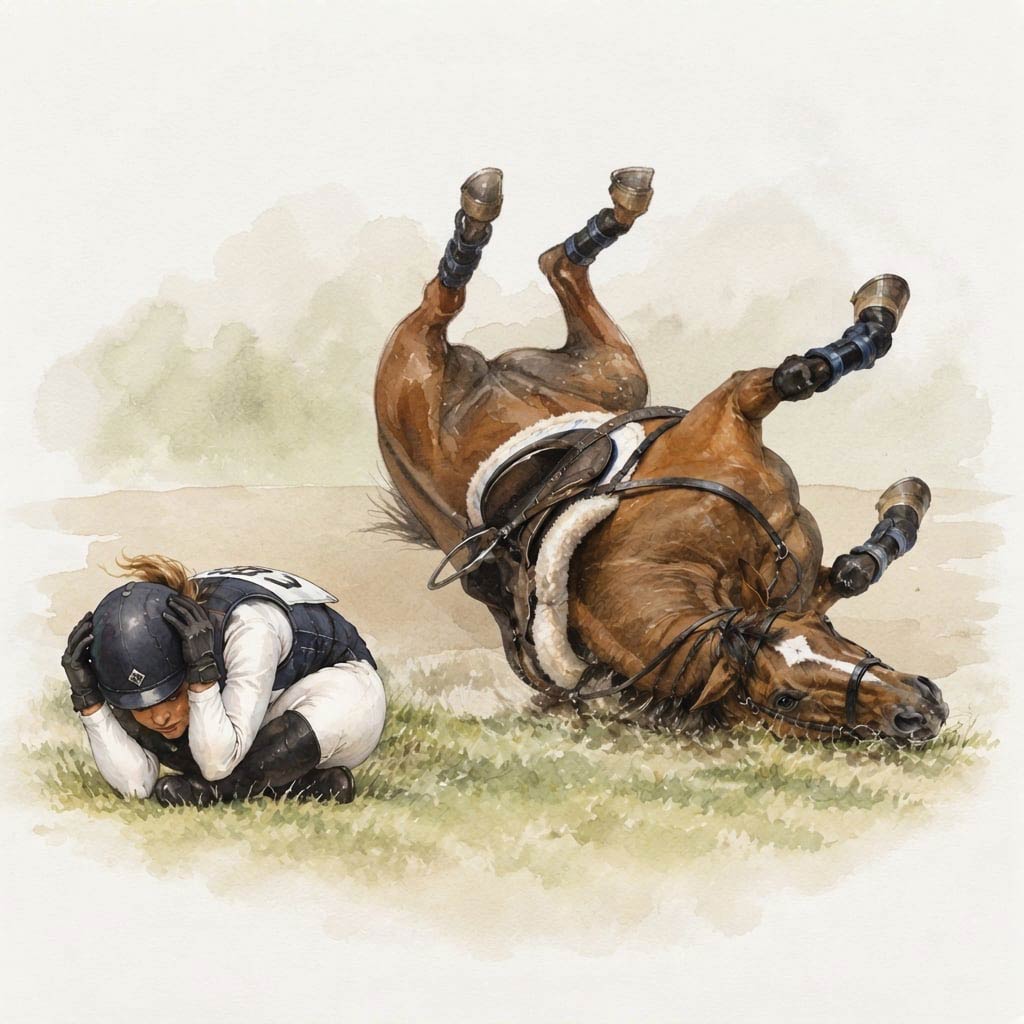
If the world looks best to you from between a horse’s ears, every grisly accident in the headlines can send you auditing your own safety habits. Here is what the research shows, what it leaves unanswered, and how riders can improve their odds.
One reason the answers are hard to pin down is that equestrian accidents are not collected in a single, comprehensive database. Instead, the evidence comes from a patchwork of sources: hospital records, sport-specific reporting, helmet lab tests, body-protector studies, and incident reports from organizations such as the FEI and US Pony Club.
Each source answers a slightly different question. Hospital studies can show which injuries are most severe, but they often miss horse-specific details such as helmet use, tack fit, discipline, rider experience, or how the fall unfolded.
What the Numbers Tell Us
The injury data point to one unavoidable conclusion: head and neck trauma matter most. A study of 24,791 adult patients treated at US trauma centers from 2007 to 2016 found that head and neck injuries accounted for about three-quarters of fatalities.
Eventing data show how much the type of fall changes the level of risk. In roughly 12,000 FEI-recorded eventing falls from 2013 to 2024, serious or fatal injury followed:
- 1.4% of simple unseated falls
- 5.5% of non-rotational horse falls
- Roughly 1 in 5 rotational falls, where the horse somersaults
No piece of equipment can eliminate that risk, especially in a rotational fall. Still, equipment remains one of the most practical ways riders can reduce the severity of certain injuries.

Heads Up, Protect Yours
The most frequently repeated statistic you’ll hear about equestrian helmets is that they reduce severe head injury risk by 50%. That figure sounds plausible, and may well be true or even too low. The number itself has gained authority via repetition and does not connect to any peer-reviewed study we could dig up. It even made it into the introduction of Virginia Tech’s Equestrian Helmet Ratings report, an otherwise data-based study. We were really hoping this report was going to lead us to confidently recommend the models with the highest ratings. Spoiler alert: nope.
A riding helmet has a tough job: it must sit securely, fit comfortably, and protect a head shape it cannot change. That is why fit matters as much as any rating. If you do not already know which model works for you, start with a professional fitting at a tack shop.
- Choose an ASTM/SEI-certified helmet.
- Make sure it fits snugly and comfortably.
- Replace it after an impact, even if there is no visible damage.
- Follow the manufacturer’s replacement guidance; many recommend replacing helmets about every five years.
- If several certified models fit well, use STAR ratings as an additional decision point.
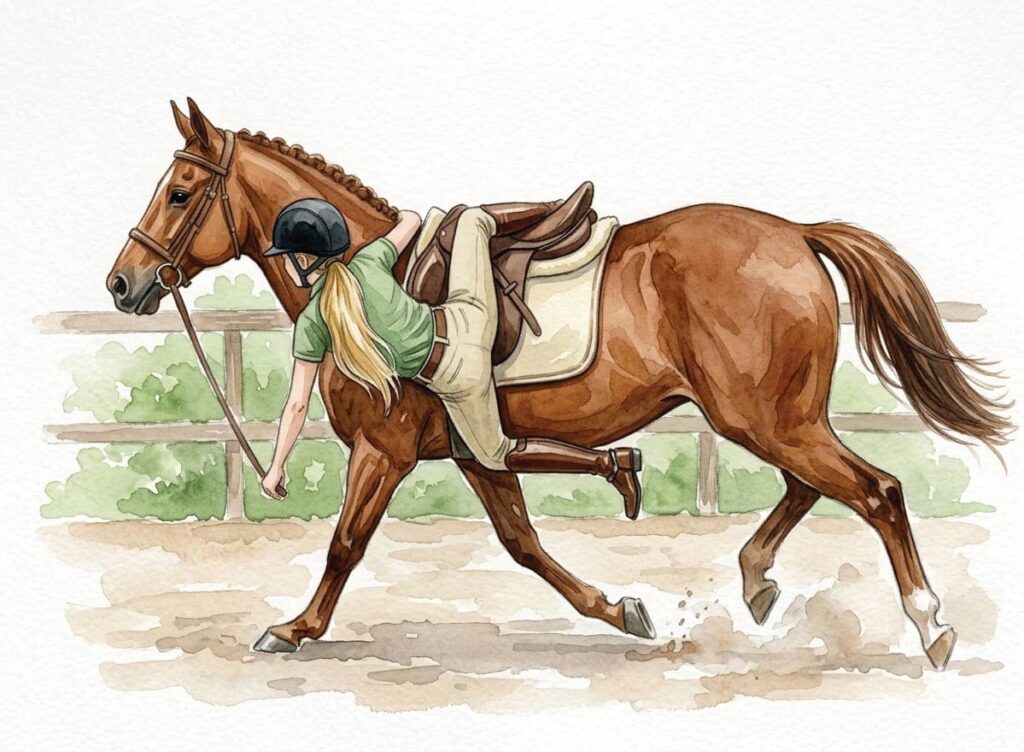
Definitive Helmet Rankings?
Virginia Tech’s Helmet Lab released its first equestrian helmet STAR ratings in December 2022. To develop the testing protocol, researchers analyzed social media videos of riding falls. Many showed riders making contact with the horse as they fell, reducing the height from which their heads reached the ground, so the researchers gave greater weight to gentler impacts. The test head is one standard shape, so a rating can’t tell you whether a helmet will sit securely and comfortably on yours. That is why we recommend finding the helmets that fit before consulting the rankings.
In 2025, Virginia Tech added angled hits, with input from the FEI, to represent falls at speed. Every test simulates a head hitting the ground. None simulate contact with a jump rail or a hoof.
Some features like the temple protection in the Freejump Voronoï or highly flexible visors may provide real-world protection that interests you and would not be reflected in STAR test scores at all.
The practical takeaway is simple: fit first, certification second, ratings third. A highly rated helmet that moves, pinches, or sits poorly is not the right helmet for you.
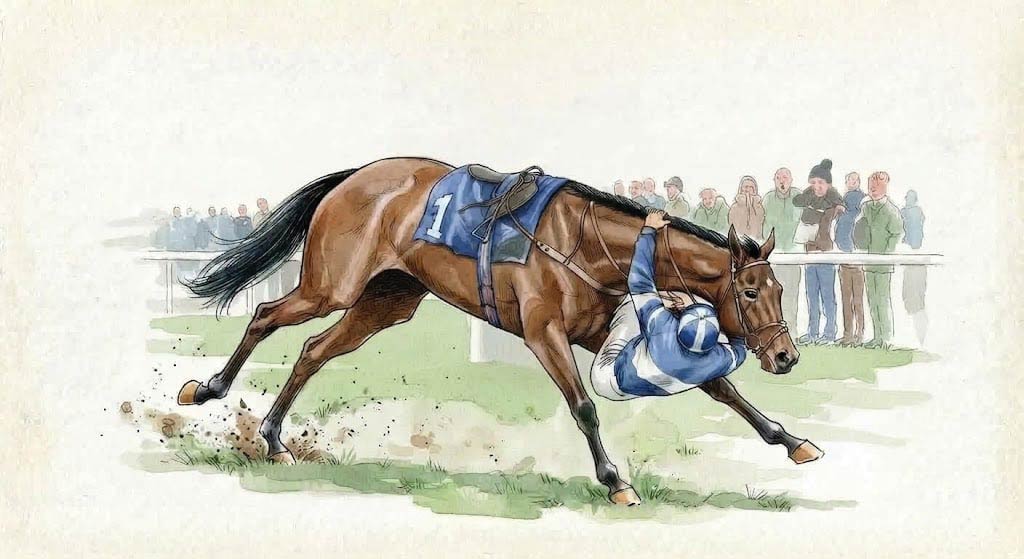
Vests: Two Kinds of “We Don’t Know”
Foam Body Protectors
Foam body protectors are required for eventing cross-country. The best real-world evidence for them comes from 174 US Pony Club cross-country incident reports from 2011 to 2017, where vested riders were injured about a third less often.
Air Vests
Air vests inflate when a tether pulls free of the saddle. In one lab study, adding an air vest over a foam vest reduced the force transmitted. The real-world data, however, point in a more complicated direction: in FEI eventing falls from 2015 to 2017, riders wearing an air jacket over a body protector accounted for about half of the riders who fell and about two-thirds of the serious or fatal injuries.
We found no US certification program for air vests and no independent test showing that an inflating collar prevents neck injury. Because the real-world data involve riders wearing foam protection underneath, an air vest worn alone remains untested in real falls.
Safety Beyond Equipment
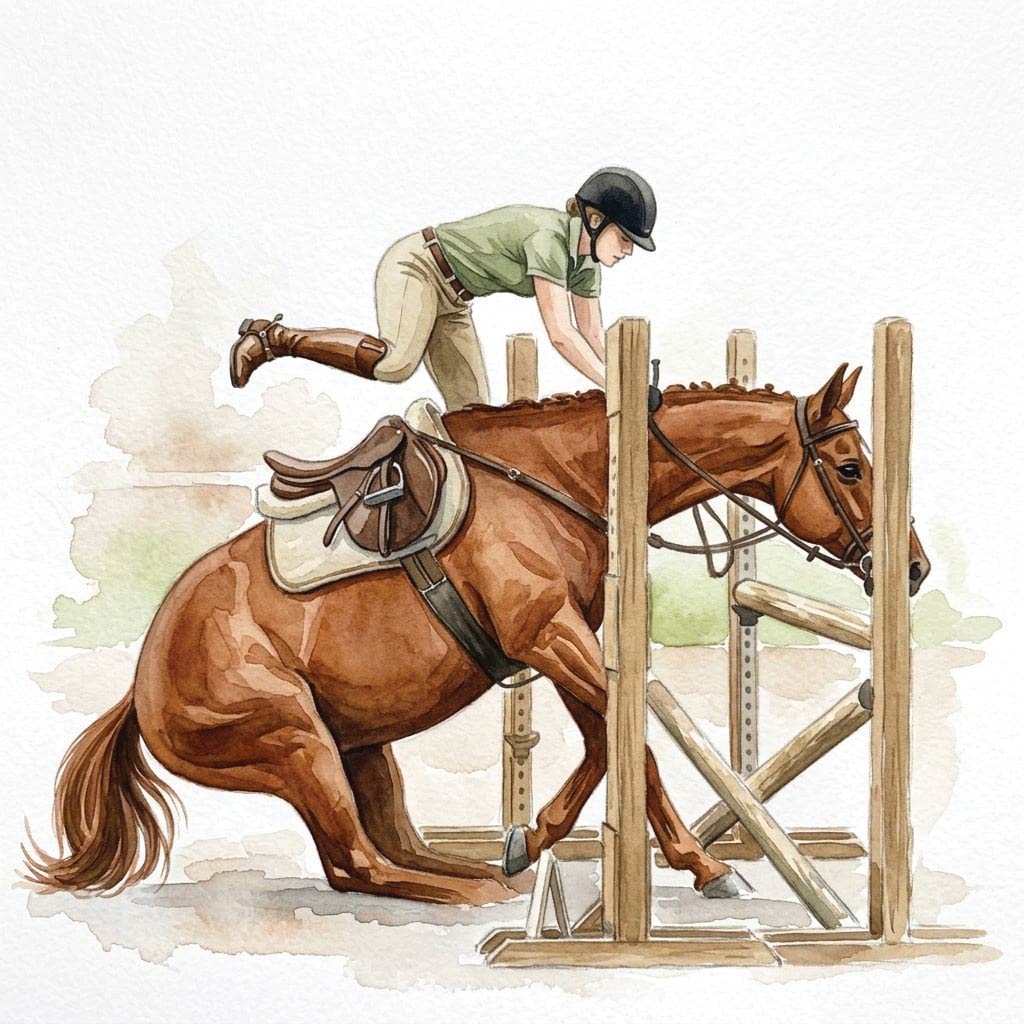
When Ask Heather stumbled after the final fence of Ireland’s Killeagh point-to-point in 2019, amateur jockey Michael Sweeney was thrown nearly all the way over her head. He lifted himself back into the saddle and went on to win. Few riders could replicate that recovery, and it shows how much physical demand a sudden loss of balance can place on a rider.
Conditioning
Off-horse conditioning builds the strength, balance, coordination, and endurance riders draw on when their position is disrupted. Research has shown that targeted core training improves riders’ dynamic balance and back-muscle endurance, which may help reduce falls. The biggest payoff is better control of your own body.
Fall Training
Fall training covers the other half: what to do when staying aboard is no longer an option. When Buca stumbled at a bank out of water, his rider says her LandSafe training took over. “My first thought wasn’t ‘I’m falling’ … It was ‘I need to get away to the side of him.’” She rolled away, then pushed harder and rolled farther when she saw the horse coming toward her. Briles came away with a collarbone injury, and credits her response with getting clear from Buca and the potential of a more crushing injury.
The bottom line: riding carries inherent risk, and that risk changes with sport, skill, fitness, equipment, circumstance, and the horse. Riders cannot control every variable, but they can make deliberate choices—fit the helmet, understand the limits of protective gear, build the body, and practice the response—that reduce the chance of serious injury.