


When the Water Runs Out
AI was built to serve people. As data centers spread across rural America, communities are confronting a harder question: How much land, power, and water should technology be allowed to consume in the name of progress—especially when deals are made behind closed doors, protected by NDAs, and shielded from public accountability.
Ponies have a particular talent for escaping after dark. They wait until no one is watching, find the weak, brush-covered board or sagging wire, nose open the gate everyone swore was latched. and quietly make their move. By morning, one pony becomes several escapees, and the chase is afoot. In hindsight the whole ordeal would have been considerably easier to manage with good preventative discipline.
There is a lesson there for the extraordinary expansion of artificial intelligence and the data centers being built to power it. Only the definition of cover of night looks different.
Data center projects can advance behind nondisclosure agreements, private negotiations and layers of corporate and technical opacity that leave the people who will live beside them—and share resources with them—trying to understand what has already been negotiated on their behalf after the damage is done. In the Delaware River Basin, even the agency responsible for protecting the watershed has acknowledged that estimating future data-center water demand is difficult in part because utilities may be bound by nondisclosure agreements with developers.
There is something fundamentally backwards about that. It is in its essence the permanant cover of darkness.
We are routinely told that mass-scale AI is inevitable, as though its size, speed and appetite for infrastructure have been dictated by nature rather than by corporations making business decisions. They haven’t, but the consequences will be. How much AI we build, where its data centers go, how they are cooled, how much electricity and water they consume, who pays for the infrastructure they require and what limits are placed upon them are choices being made right now. Something supposedly inevitable should not need secrecy to establish itself. Quite the opposite. The greater the scale and consequence of a technology, the greater the case for sunlight, scrutiny and accountability. Like a utility, technology is a tool to serve, it doesn’t have the right to destroy for power and profit.
On the point of inevitability and subsequent laissez-faire resource abuse, other countries have demonstrated that municipalities do not have to simply open the gates and leave them that way. Elsewhere, governments and engineers have begun asking a different question: not simply how to feed data centers enough resources to operate, but how to make data centers fit within the resources communities can afford to give them. China has put commercial computing infrastructure beneath the sea, using seawater rather than freshwater for cooling. Finland and Denmark capture server heat to warm homes. Norway sends it to a trout farm, where heat that would otherwise be wasted becomes part of a closed-loop food-production system. None is a perfect solution. Together, however, they dismantle one particularly convenient assumption: that the resource-intensive model being proposed in American communities is somehow technologically inevitable.
Neither country has solved every problem posed by data centers. But both demonstrate an important principle: technology can be required to accommodate the needs and limits of society rather than society continually being required to accommodate technology.
That principle matters most when the resource at stake is water.
AI is a tool created to serve people. It is not a person. It is not a community. It has no moral or civic claim to a river, reservoir or aquifer that supersedes the humans, farms, animals and ecosystems already dependent upon it. Corporate ambitions for AI do not somehow move to the front of the line simply because the companies pursuing them are large, powerful or racing one another to get there first.
If current cooling technology requires too much water, then cooling technology needs to improve. If a proposed facility would place an unreasonable burden on a watershed, then it belongs somewhere else—or perhaps should not be built at all. If operating artificial intelligence at a particular scale requires sacrificing resources essential to the communities it was ostensibly created to serve, then its scale deserves reconsideration.
So when a developer tells a rural American community that tremendous water consumption, waste heat, new transmission infrastructure or other burdens are simply the unavoidable cost of AI, the evidence elsewhere says otherwise.
There are engineering choices. There are siting choices. There are regulatory choices. And there are choices about who receives the benefits and who absorbs the costs and impact.
None of that is anti-AI. It is a call for responsible management.
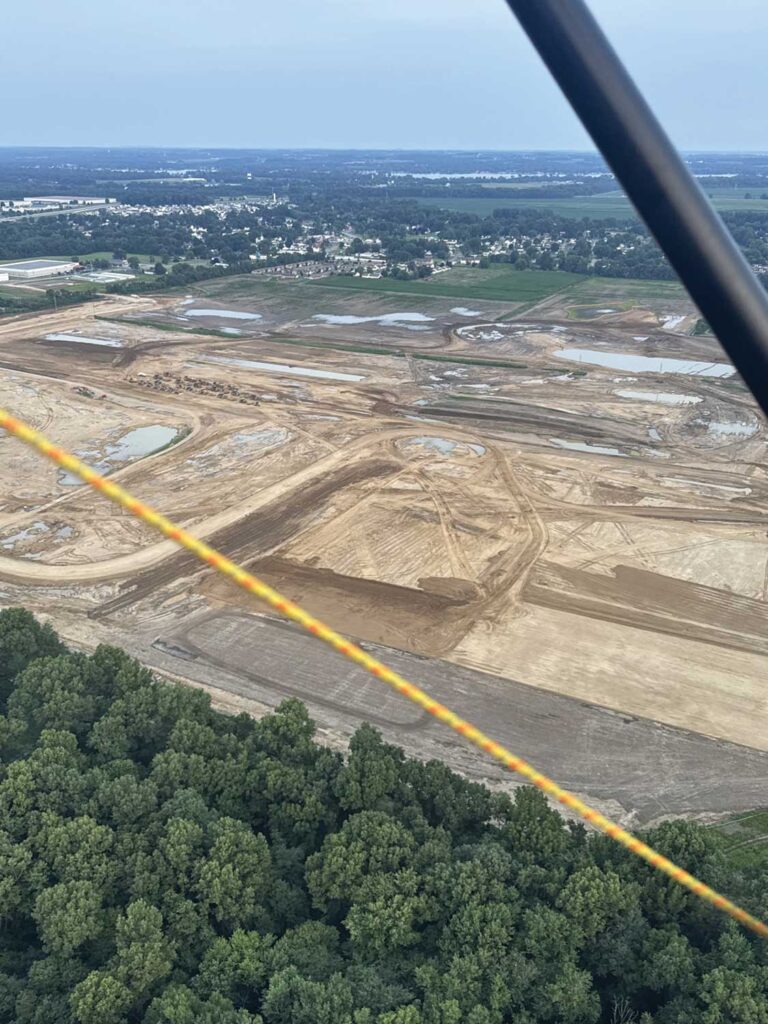
Horse people understand the concept instinctively. We manage land according to what it can sustain. We rotate pastures. We protect water. We limit stocking rates. We repair fences before horses get through them. We do not keep adding animals to a field and call the resulting mud, erosion and depleted resources inevitable progress.
And some mistakes are easier to correct than others.
A loose pony and his friends can usually be caught. A broken fence can be rebuilt. A depleted aquifer, damaged watershed or industrialized rural landscape can not be so easily put back where it started. In fact, water sets the ultimate boundary because, unlike server capacity, it cannot simply be manufactured on demand.
When the water runs out, so do the horses, the humans and, eventually, the data centers. Which is why the time to inspect the fence is now.
In Belvidere, New Jersey, horsewoman Bridget Folts has already started looking for the weak spots.
Hold Tight
Bridget Folts has been in the horse business for 15 years and operating from Belvidere, New Jersey for the last four.
“We just spent a large amount of money to build a new indoor and barn, and do new footing for the outdoor. So at this point,” Bridget said, “we cannot afford to move.”
Belvidere is a small town in the northwest corner of the state. She has been watching AI data center proposals encroach upon not only her own community but also Upper and Lower Mount Bethel Townships in neighboring Pennsylvania. When East Coast Equestrian first spoke with her for this story, there were three proposed data centers within a 15-mile radius of her farm.
“A huge part of the appeal of our farms and this area is how we have beautiful rural nature all around us. That’s somewhat of a rarity for New Jersey. This draws [equestrian] clients from NYC, Philadelphia and more metro areas of New Jersey.”
The Centenary University marketing graduate is concerned over how data center construction could destroy local assets. “The change in scenery alone jeopardizes the peaceful quiet that acts as a marketing advantage for those of us with smaller farms adjacent to large metro areas.”
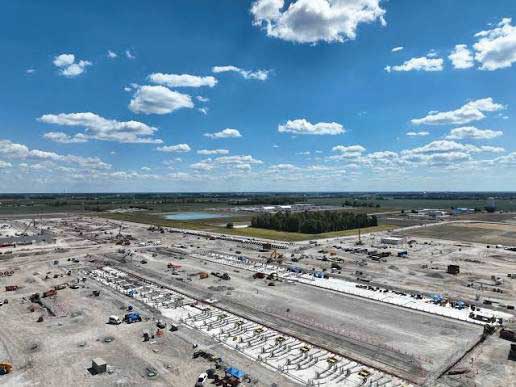
Developers Peron, J.G. Petrucci and Talen Energy had proposed a data center campus at a 37-acre warehouse site in Belvidere and, in Pennsylvania, a 239-acre data center campus near existing Talen Energy power plants in Lower Mount Bethel Township plus a 754-acre data center campus in Upper Mount Bethel Township tied to River Pointe Commerce Park.
When the three centers were proposed, they were among at least 50 such proposals for data centers and 20 calls for hyperscale (5,000+ servers on at least 10,000 square feet of physical space) data centers introduced in Pennsylvania.
Nasty Weather
“From a cost perspective, developers seem to be quite okay with us subsidizing the electric costs to run these massive data centers. Horse farms, especially lesson barns, already operate on razor-thin margins, if they have a margin at all. A large increase in electric bills could bankrupt some farms,” the New Jersey horse owner fears and with good cause.
Both Goldman Sachs and Carnegie Mellon University researchers project increases in national residential electricity bills within the next five years of 8% to as much as 25% in “hubs” where multiple data centers and network infrastructure are concentrated.
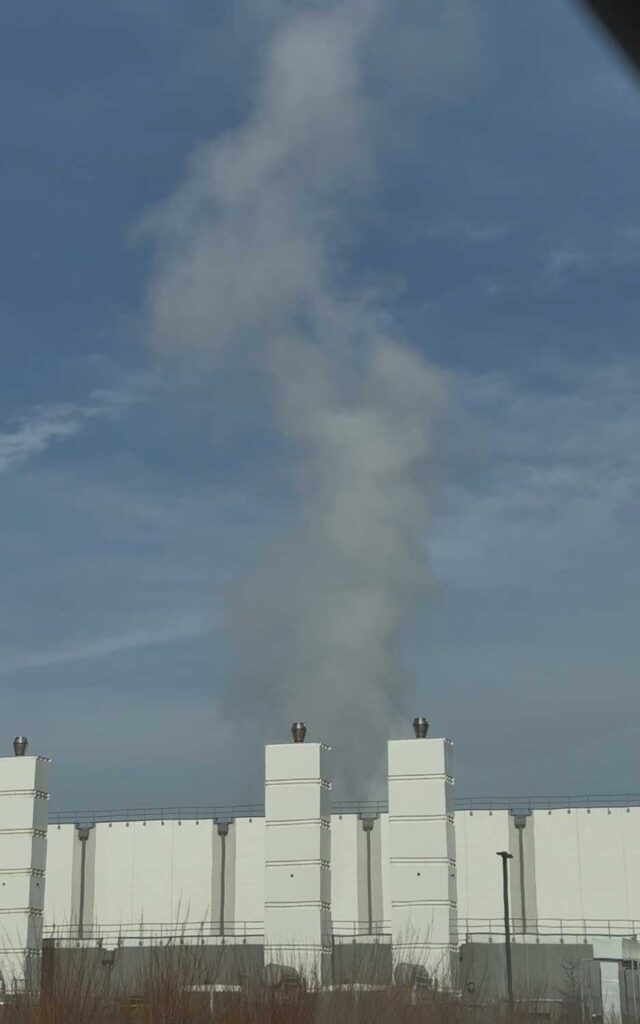
Closer to her own barn, New Jersey and Pennsylvania share regional grid operator PJM International, tracked by Monitoring Analytics, which finds that data centers are driving an estimated 1.5% to 5% baseline annual increase in consumer electricity bills. Additionally, the New York Times and Philadelphia Inquirer report data centers will add “billions in costs” to utility customers across 13 states and the District of Columbia: Delaware, Illinois, Indiana, Kentucky, Maryland, Michigan, New Jersey, North Carolina, Ohio, Pennsylvania, Tennessee, Virginia and West Virginia.
“Now… as for the environmental concerns,” Bridget said. “If pollution occurs in the Delaware River, like it has in other rivers in the United States, it could kill entire crops of hay and the crops – corn, wheat, etc. – that make our grain. That would drive feed costs even higher than they already are.”
For instance, in February 2026, a contractor for a Meta AI data center in Cheyenne, Wyoming was found to have polluted the local recycled water system with a rare soil bacterium, Cupriavidus gilardii, forcing the city to shut down public water re-use systems (like golf courses, parks and sports fields) while creating months of costly disinfection efforts. The contractor? Fined $10,000.
Environmental concerns are not just casual observation. Almost a third of the land directly draining into the Delaware River watershed is used for agricultural production, according to PACD (Pennsylvania Association of Conservation Districts, Inc.), and agriculture in the Delaware River Basin is a $3.4 billion industry, relying on 60+ million gallons of fresh water per day for local irrigation and livestock.
What also drives hundreds of millions of economic impact dollars? A horse industry supporting jobs, driving tax revenue and in need of clean water, too. A regional economic study by Delaware Valley University identified 30,000-40,000 horses in the Pennsylvania portion of the watershed alone, and state agricultural tracking data compiled by East Coast Equestrian found roughly 13,000 equines in Delaware, including about 6,500 in the river basin.
Multiply tens of thousands of horses by the 20 gallons of clean water that each one should, give or take, drink daily and… you get the point.
“Returned water” euphemistically describes the discharge from AI data centers of millions of gallons of water used daily to absorb the heat generated by the electricity running servers and air chillers.
How much heat? Glad you asked. The math says, at 1,500 BTU/hr or 440 Watts per horse, a 30-horse stable generates about 13,200 Watts (13.2 kW) compared to the 5,500 kW (5 Megawatts) of continuous heat generated by the average data center.
Or, to put that in equestrian terms, matching the heat output of one 5 Megawatt data center requires a mega-barn of 11,360 horses. The heat causes natural evaporation, condensing more minerals in less water. The remaining liquid not only has a higher saline (salt) percentage but also traces of heavy metals and corrosion-inhibiting chemicals that were later added by the facility. While preferable to “raw dumps,” date center returned water could overwhelm municipal capacities.
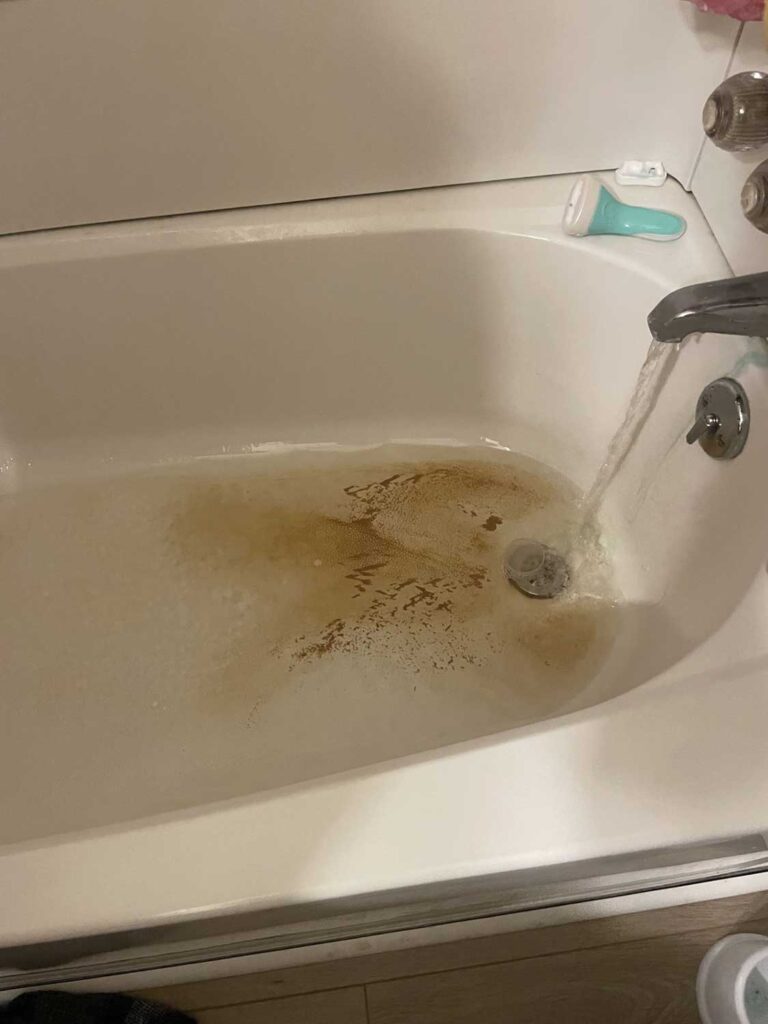
Is this water you or your horse would choose? Is there still a choice? In April 2026, the Sullivan County Democrat reported that water resources scientist Amanda Khalil and the Delaware River Basin Commission (DRBC) had identified 66 active and another 24 proposed data centers spanning Delaware, New Jersey, New York and Pennsylvania.
Khalil said DRBC had not seen any approvals or applications for centers, “But we are trying to prepare. We’re just trying to keep track.” She called it difficult to project how much water might be used for data centers within the basin given that national projections don’t correlate to the area, and water supply utilities likely have non-disclosure agreements (NDAs) with data center developers. Nonetheless, “It’s logical to see projected growth of data centers also results in projected demand in power.”
And then there’s noise. Bridget has put years into professionally overseeing horse care and comfort, including for collegiate teams, and understands the importance of giving horses a peaceful, restful environment during their time off. She’s concerned that what her horses might face is very different.
“The data center proposed in LMBT (Lower Mount Bethel Township),” she said, “was quoted to potentially produce as much heat as 800,000 space heaters and the fans they intend to cool this one with will produce a constant hum.”
In comparison, a March 2026 report from the Environmental and Energy Study Institute, spurred by the impact of a data center in a Chandler, Arizona neighborhood in 2014, generated three takeaways:
- Noise pollution regulations, including local and state zoning ordinances, are out of date, and legal authority exists to make changes and updates.
- Data centers continuously emit sounds, including humming of cooling systems, rumbling of diesel generators, and whirring of fans that can be heard for hundreds of feet around them.
- Because there is a lack of reliable data from sound meters, and most local ordinances were written to address noisy parties not megawatt centers, most noise complaints go unaddressed, leading to community frustration and lower property values
Data center neighbors have experienced nausea, headaches, vertigo, sleep disturbances, ear pain, and hypertension. Kyle Hart with the National Parks Conservation Association told EESI that people living near data centers “hear the noise day and night as a ringing in their ears.” The EESI March report predicted data centers becoming noisier as developers stack more information technology (IT) equipment and servers into smaller spaces, and the compounding effect of thousands or tens of thousands of servers in one warehouse can increase noise levels up to 96 decibels and within 50-feet of homes.
While this report did not mention animals or horses, according to Boehringer Ingelheim Animal Health, a horse’s hearing comfort range – comparable to a normal human speaking voice – is 60-80 decibels. According to mammal hearing specialist, Dr. Rickeye Heffner at the University of Toledo (OH), repeat exposure hearing damage begins at 85 decibels, physical damage occurs at 150 decibels, and eardrum rupture occurs at 190 decibels.
(Note: Find The Environmental Impacts of Data Centers (EESI Article Series) on the impacts of data centers including their energy needs, water usage, noise pollution and contribution to higher energy bills at eesi.org/data-center-impacts.)

My House
“We have about 30 horses on the property. Ten are over the age of 20 and I worry deeply for their health,” Bridget said. “Horses are challenging enough to keep healthy and happy under normal environmental circumstances.” Her elder charges include Cosentino, or Cosi, a 21 year-old Oldenburg gelding whose golden years, she believes, deserve the peace and quiet of a farm nestled in mountains and cornfields.
Since first talking to Bridget, she has been attending weekly town meetings and getting involved with her Pennsylvania neighbors to catch these metaphorical ponies and demand a closer inspection.
“Belvidere has been able to pass a data center ordinance which essentially bans the one proposed here (woot woot). This means there are only the two in Upper and Lower Mount Bethel still proposed near by. Per Pennsylvania law, they can’t outright ban them. However, the governor has put out an executive order making it more challenging for them, and there are currently seven anti-data center bills that have passed the Pennsylvania House of Representatives and await passage in the Senate.
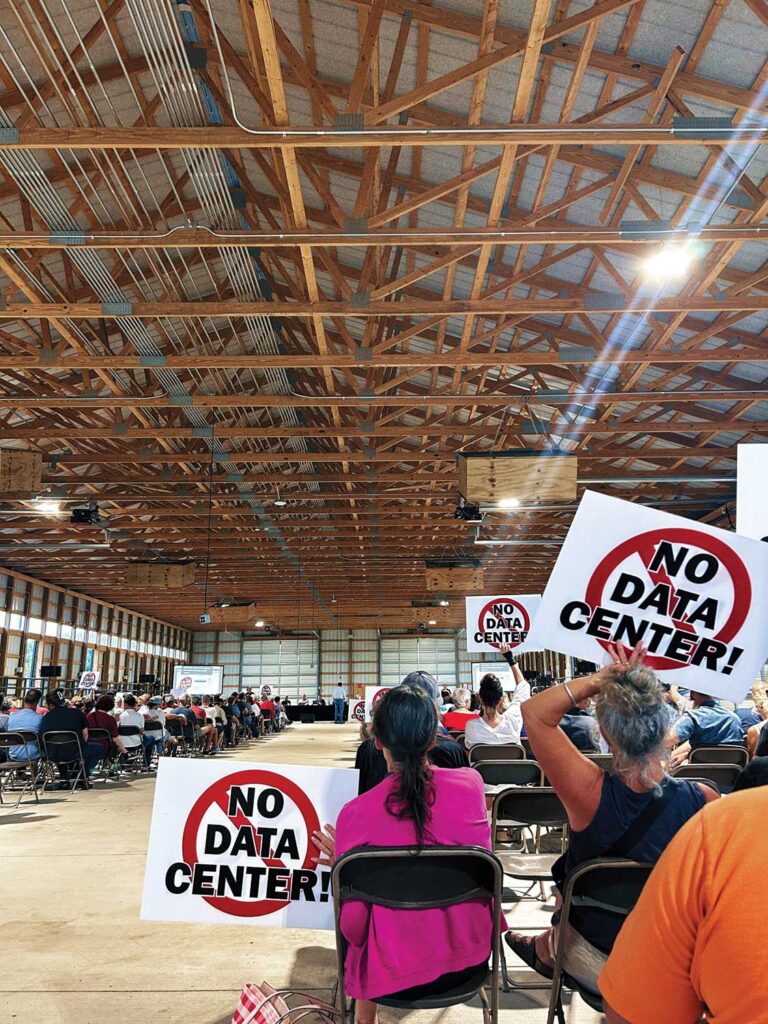
“Developers are breathing down the necks of local supervisors and zoning boards trying to get these deals negotiated before anything reaches the Senate. Thankfully, there is a huge community pushback. Over 300 people have attended the last two meetings and we have started working with the Delaware Riverkeeper Network to stop the data centers,” she concluded.
“What effects could these sudden environmental changes have on our horses? None of us really know. The fact is, we don’t know most of these answers and the answers we do know spell disaster for any agricultural or rural lifestyle.”
“Why do we insist on building these across communities that largely do not want them?”