
Virginia: Where Land, Legacy, and Horsepower Still Define the Sport
In a state shaped by open space and deep-rooted tradition, equestrian culture isn’t just preserved—it’s lived.
State Built for Horses
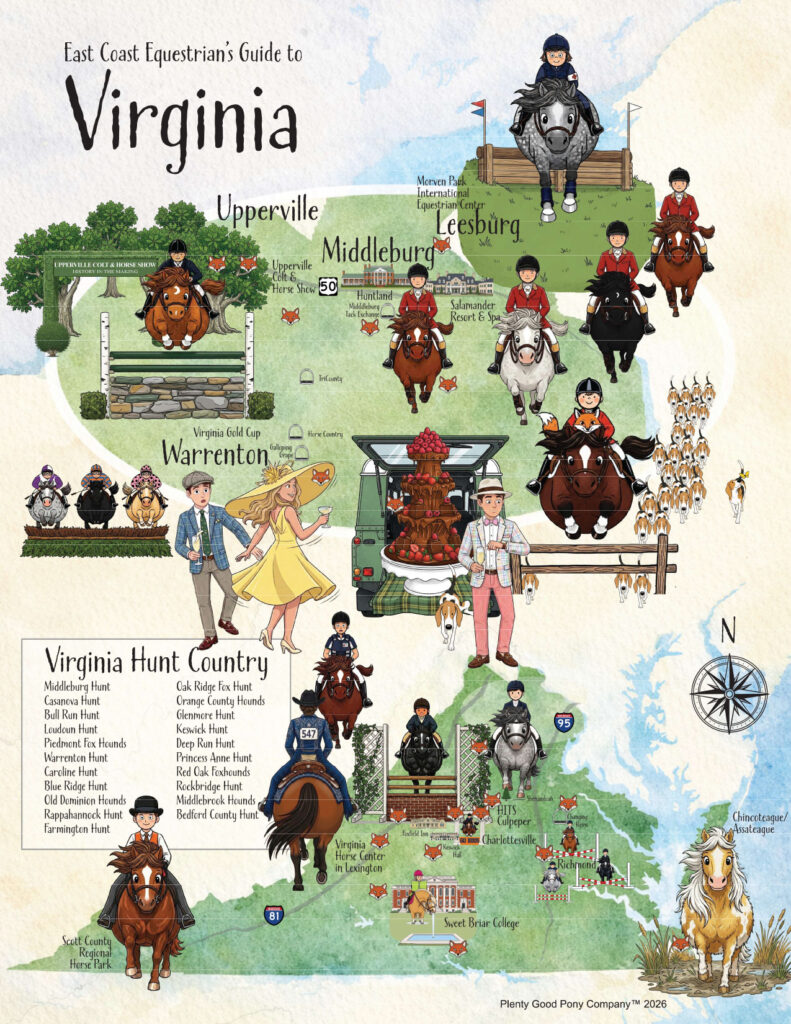
Virginia doesn’t just have an equestrian industry—it has an equestrian landscape. With more than 215,000 horses statewide and an estimated $2 billion-plus economic impact, horses remain central to the state’s agricultural and cultural identity. But those numbers only tell part of the story. What defines Virginia is not scale alone, but how deeply horses are woven into land use, community structure, and daily life. Unlike more condensed Northeast markets, Virginia horse country is expansive. In Loudoun, Fauquier, Clarke, and Orange counties, preserved farmland stretches for miles, protected by conservation easements that have safeguarded more than 500,000 acres of open space. This land is not ornamental—it is actively ridden, hunted, conditioned, and maintained as working horse country.
Drive through Middleburg, Upperville, or The Plains, and the infrastructure tells the story: stone walls, timber barns, galloping lanes, and hunt fixtures that have been in place for generations. Institutions like the Middleburg Library quietly anchor the community, serving as gathering points not just for residents, but for the equestrian culture that surrounds it. Here, horsemanship is not confined to the show ring—it is built into the landscape.
Hunt Country is The Cultural Core
At the center of Virginia’s identity is foxhunting—not as a relic, but as a living system that continues to shape how horses are bred, trained, and ridden. Hunts operate multiple days a week throughout the season, maintaining thousands of acres of rideable country. Participation spans from seasoned professionals to juniors, creating a pipeline of riders grounded in real horsemanship. This system influences everything. Horses are expected to go across country, stand quietly, handle terrain, and think for themselves. Riders develop balance and feel long before stepping into a jumper ring. Even at the highest levels of competition, many Virginia riders carry that foundation with them. Around Charlottesville and Keswick, the equestrian landscape is defined by rolling farmland and legacy estates, supporting a mix of eventing programs, foxhunting, and steeplechasing—anchored by races like the Foxfield Races—alongside private sport horse operations and a strong University of Virginia–adjacent riding community.
Competition Anchors and National Venues
While Virginia is defined by tradition, it is also home to some of the most significant competition venues in the country. The Upperville Colt & Horse Show, founded in 1853, is the oldest horse show in the United States and continues to draw top hunter, jumper, and equitation riders each year. Just down the road, Great Meadow has evolved into a multi-discipline hub, hosting international show jumping, eventing, and the Virginia Gold Cup steeplechase, drawing thousands each spring and fall.
Eventing runs deep in Virginia. Morven Park operates as a premier competition and educational facility, hosting recognized events and serving as a training ground for riders at multiple levels. Combined with the Virginia Horse Center in Lexington—one of the largest equestrian facilities on the East Coast—the state supports a year-round competition calendar across disciplines.
Breeding, Racing, and the Working Horse
Virginia’s equestrian identity isn’t limited to sport—it is also agricultural and production-based.
The state maintains a significant Thoroughbred breeding industry, supported by incentive programs and a long history of producing competitive racehorses. Steeplechase racing remains culturally important, blending sport with tradition. Virginia has also become a hub for sport horse breeding, with Warmblood operations producing hunters, jumpers, and eventers tailored to the U.S. market. Unlike more urban markets, Virginia still supports a true working-horse model. Horses are conditioned in open fields, hacked through varied terrain, and expected to be functional partners—not just show-ring specialists.
Around Charlottesville and Keswick, the equestrian landscape is defined by rolling farmland and legacy estates, supporting a mix of eventing programs, foxhunting, and steeplechasing—anchored by races like the Foxfield Races—alongside private sport horse operations and a strong University of Virginia–adjacent riding community.
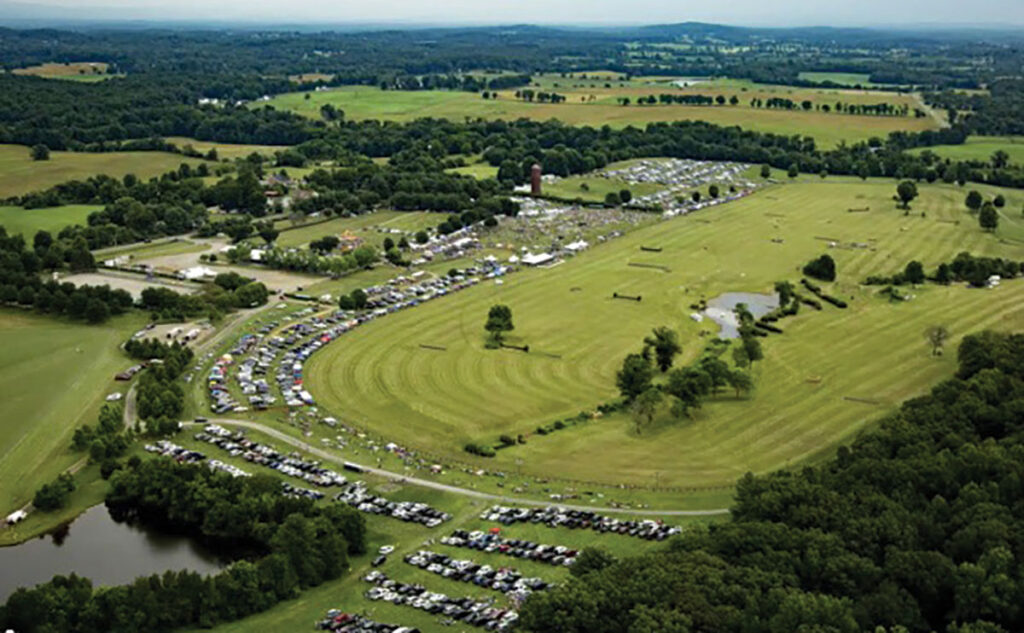
Nowhere is Virginia’s equestrian identity more visible than at Great Meadow, where the Virginia Gold Cup and International Gold Cup transform open fields into one of the country’s most iconic steeplechase scenes—equal parts high-level racing, community tradition, and social spectacle.
A Culture Defined by Balance
What ultimately defines Virginia is balance. It is a state where high-performance sport coexists with deep-rooted tradition, where international competitors train within miles of active hunt fields, and where land preservation directly supports the future of the industry. Infrastructure reflects this balance. Facilities are expansive, designed to take advantage of acreage. Riders benefit from trails, galloping lanes, and natural terrain—elements increasingly rare elsewhere.
Seasonal traditions reinforce this identity. Events like Christmas in Middleburg transform the town into a celebration of equestrian life, with hunt riders, hounds, and decorated horses moving through the streets—blending community, spectacle, and heritage in a way few places can replicate. At the same time, expectations remain high. Virginia riders compete nationally and internationally, and its venues attract top talent. But unlike markets driven by density, Virginia’s equestrian culture is sustained by land, continuity, and a shared understanding of horsemanship.
In Virginia, horses are not an accessory—they are central to place, purpose, and identity.