



EHV in the Spotlight: What Horse Owners Need to Know as Show, Clinic, and Trail Season Heats Up
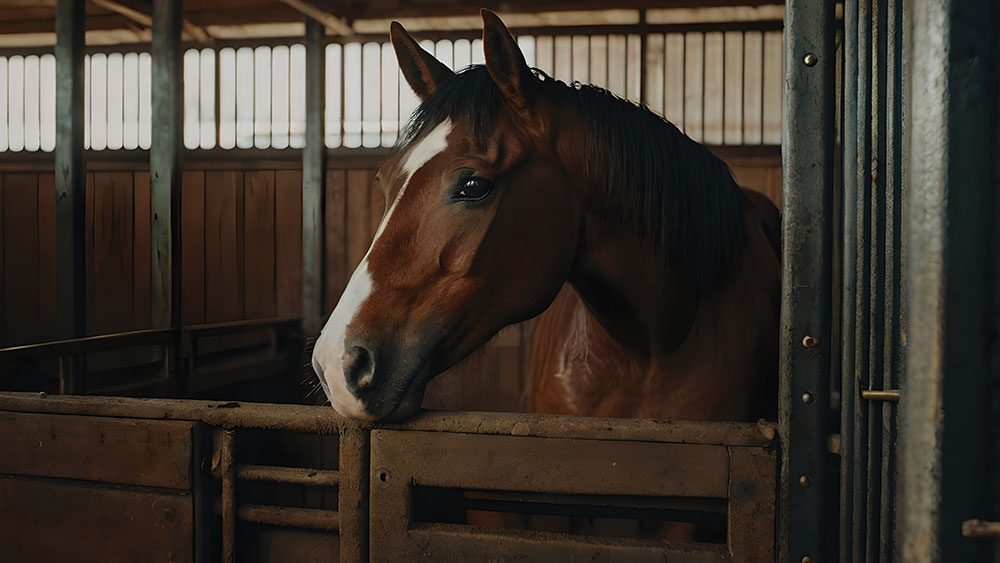
From busy showgrounds to shared trailheads, equine herpesvirus remains a persistent risk—here’s how to recognize it, contain it, and protect your horse when exposure happens.
EHV is not a rare or emerging disease. In fact, most horses are exposed to equine herpesvirus at some point in their lives. The two primary strains, EHV-1 and EHV-4, circulate widely in the horse population. EHV-4 is typically associated with respiratory illness, while EHV-1 carries more serious implications, including abortion in mares and equine herpesvirus myeloencephalopathy (EHM), the neurologic form that can lead to paralysis or death.
What makes EHV particularly concerning during show and travel season is not just its severity—but its subtlety.
The Quiet First Sign: Fever
Unlike many illnesses that announce themselves clearly, EHV often begins quietly. A horse may appear normal, eating and working as usual, while developing a fever that lasts only a short window. The American Association of Equine Practitioners (AAEP) notes that fever is frequently the first—and sometimes only—early warning sign.
That’s why veterinarians emphasize one simple but critical practice: take your horse’s temperature twice daily when traveling, competing, or returning home from events.
From there, signs can escalate. Owners should watch for nasal discharge or coughing, lethargy, swelling in the limbs, incoordination, stumbling, hind-end weakness, and difficulty urinating. In pregnant mares, late-term abortion can occur.
How EHV Spreads—and Why Season Matters
EHV spreads easily through respiratory secretions—nose-to-nose contact, shared water buckets, tack, stalls, trailers, and even human hands, boots, and clothing.
During quieter winter months, many barns operate in relatively closed systems. But as spring and summer arrive, those barriers break down. Horses ship in and out of facilities, mingle at warm-up rings, share wash racks, and tie to communal trailers at trailheads.
The United States Department of Agriculture (USDA) notes that increased horse movement is one of the primary drivers of EHV transmission. Even well-managed events can become exposure points simply due to volume and proximity.
Vaccination plays a role, particularly in reducing respiratory disease and viral shedding, but it is not a complete safeguard. Current vaccines do not reliably prevent the neurologic form (EHM), which means biosecurity—not vaccination alone—is the frontline defense.
If EHV Is Detected at an Event
Hearing that EHV has been identified at a show or clinic is every competitor’s nightmare—but the response matters more than the moment.
The instinct to immediately pack up and leave can actually worsen the situation. Veterinary authorities emphasize that uncontrolled departures can spread the virus far beyond the original site. Instead, follow official guidance from show management, event veterinarians, and state animal health officials.
At a minimum: stop all non-essential horse movement, avoid horse-to-horse contact, do not share equipment, begin twice-daily temperature monitoring, and disinfect hands, boots, and equipment frequently.
If You Learn About Exposure After You’re Home
In many cases, owners only learn of potential exposure after returning home. This is where discipline and early action make a measurable difference.
First, call your veterinarian before moving the horse again.
Then implement immediate isolation: keep the exposed horse separated for at least 21 days, use dedicated equipment, handle isolated horses last, and maintain strict hygiene practices.
Temperature monitoring should continue twice daily, and any spike should be reported immediately.
Communication Is Containment
One of the most effective tools in managing EHV isn’t medical—it’s communication. Owners should notify barn managers, trainers, and anyone whose horses may have had contact.
The Equine Disease Communication Center (EDCC) provides verified, real-time alerts on outbreaks and remains one of the most reliable sources for tracking disease activity.
A Manageable Risk—With the Right Approach
EHV is part of the reality of horse ownership. It cannot be eliminated entirely—but it can be managed effectively with vigilance and routine.
Take temperatures. Limit contact. Isolate when in doubt. Call your veterinarian early. And communicate clearly.
In a season defined by movement, awareness is the one thing that must travel with every horse.
Sources
- American Association of Equine Practitioners. Equine Herpesvirus (EHV-1 and EHV-4) Guidelines. https://aaep.org/resources/guidelines/equine-herpesvirus
- United States Department of Agriculture. Equine Herpesvirus Disease Information. https://www.aphis.usda.gov/livestock-poultry-disease/equine/herpesvirus
- Equine Disease Communication Center. Disease Alerts and Biosecurity Resources. https://www.equinediseasecc.org
- American Association of Equine Practitioners. Biosecurity and Infectious Disease Control Guidelines. https://aaep.org/resources/guidelines/infectious-disease-control