
This is Horse Country
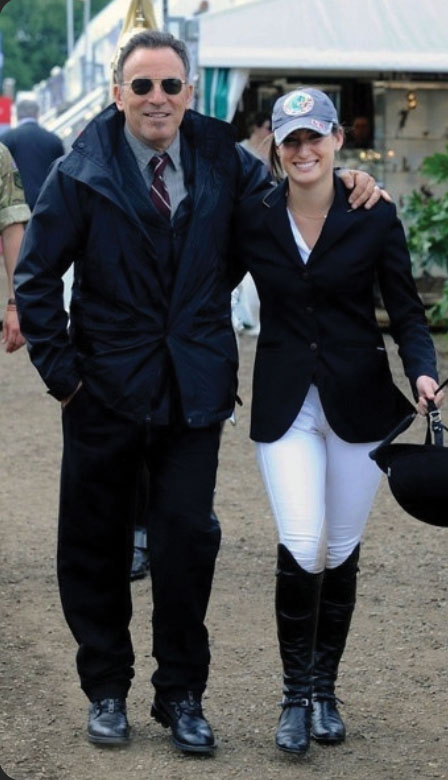 New Jersey Native Bruce Springsteen walks with his boss daughter Jessica Springsteen at the Devon Horse Show.
New Jersey’s Garden State Grit. A Tony Legacy with a Backyard Heart.
New Jersey is one of the most quietly powerful equestrian states in the country—a place where Olympic legacy, hunt-country tradition, elite athletes, and deeply rooted everyday horse culture coexist in remarkably tight geography. It is not defined by size, but by density — of talent, infrastructure, and participation. Within a short drive, a rider can move from a backyard pasture to a nationally renowned arena, from a Pony Club lesson to an international three-day event. The result is a horse culture that is serious, efficient, and enduringly authentic.
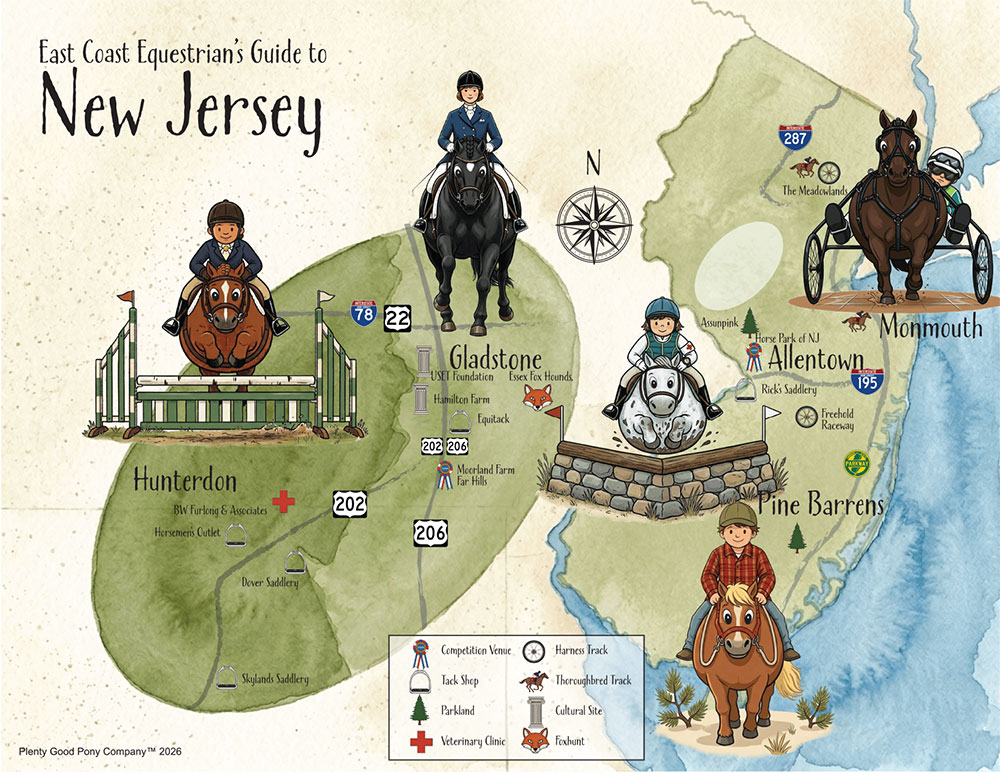
At the heart of New Jersey’s equestrian identity is its hunt country—particularly across Somerset and Hunterdon Counties—where preserved land and long-standing farms sustain a distinctly East Coast riding tradition. The Essex Fox Hounds remain one of the oldest mounted foxhunting clubs in the United States, with an active calendar of meets that continues to shape the rhythm of the local horse community. Their legacy extends beyond sport. Riders such as Jacqueline Kennedy Onassis helped elevate and cement New Jersey’s place within America’s historic hunt country network. This is not symbolic tradition—it is still a vibrant heartbeat – culminating each fall at the Far Hills Race Meeting. While one of the most iconic steeplechase events in the United States, it is also like most steeplechase meets: It is equal parts sport and social institution. Stylish tailgates stretch across the fields; local fans and families gather, and the full spectrum of New Jersey horse culture shows up in one place.
Born in New Jersey
New Jersey’s equestrian identity extends far beyond canary vests and tweeds, seeping into broader cultural influence. Bruce Springsteen has long captured the spirit of the state—its pride and working-class resilience in song. That same ethos and DNA beats in his daughter, Jessica, a Grand Prix rider, and Olympic medalist who rose from New Jersey’s riding landscape to the international stage.
While not everyone from Jersey is a rockstar, there remains a deep tradition of excellence rooted in equitation-based fundamentals—the belief that form is function doesn’t just apply to horse conformation, but to riders as well. That philosophy, forged in the Hunterdon County corridor, created a uniquely effective pipeline: backyard barns, serious instruction, and constant access to competition working together to produce real talent who rose to national acclaim. Beezie Madden is one of the most respected, and most accomplished riders in U.S. equestrian history, and her development reflects the New Jersey – Mid-Atlantic – national pipeline that has produced generations of top riders. The broader Hunterdon/Somerset region remains a hub of elite training, serious amateurs, and rising talent, where that equitation-driven ecosystem continues to produce riders capable of competing at the highest levels.
National-Level Venues; A Wealth of Sports
New Jersey’s national significance is anchored by the United States Equestrian Team Headquarters at Gladstone, long considered the spiritual home of U.S. equestrian sport. Gladstone has trained generations of Olympic riders and remains a premier venue for USEF/USDF dressage competitions, combining world-class footing with historic gravitas.
Eventing finds its flagship in the Jersey Fresh International Three-Day Event, held at the Horse Park of New Jersey—one of the premier competitions in North America and a critical stop on the international calendar. Historically, the influential Radnor Three-Day Event further shaped the development of eventing talent across the Mid-Atlantic, reinforcing New Jersey’s role in the sport’s evolution.
New Jersey’s Thoroughbred breeding industry is smaller, more boutique in nature, and regionally integrated, built around hands-on breeders rather than large commercial stallion operations. Anchored by Monmouth Park Racetrack and supported by modest state-bred incentives through the New Jersey Thoroughbred Horsemen’s Association, it maintains continuity but not large-scale growth. Most breeders operate small farms, often breeding a limited number of mares to stallions in neighboring states like Pennsylvania, Maryland, and New York. While it lacks the scale and financial incentives of larger breeding states, New Jersey produces well-raised horses and remains an important contributor to the broader Mid-Atlantic racing ecosystem.
Backyard Barns & the Everyday Horse Culture
For all of its Olympic history and elite training infrastructure, New Jersey’s true strength lies in something less visible but more powerful: the prevalence of backyard barns and active, everyday horse ownership.
Across the state, it is common to find:
- Small private farms with a handful of horses
- Families balancing work, school, and riding
- Riders who hack daily for pleasure—not just train for competition
- Horses kept as partners in lifestyle, not just performance
Despite development pressures experienced everywhere, New Jersey has preserved meaningful riding access. One example, The Assunpink Wildlife Management Area and the Pine Barrens provide miles of trail riding, offering a vital counterbalance to structured training environments.
This multi-faceted culture forms the foundation of the entire industry in the state. It feeds lesson programs, Pony Club, 4-H, local shows, and ultimately the upper levels of sport. It is also what makes New Jersey unique: This is not a spectator horse state—it is a participation state.